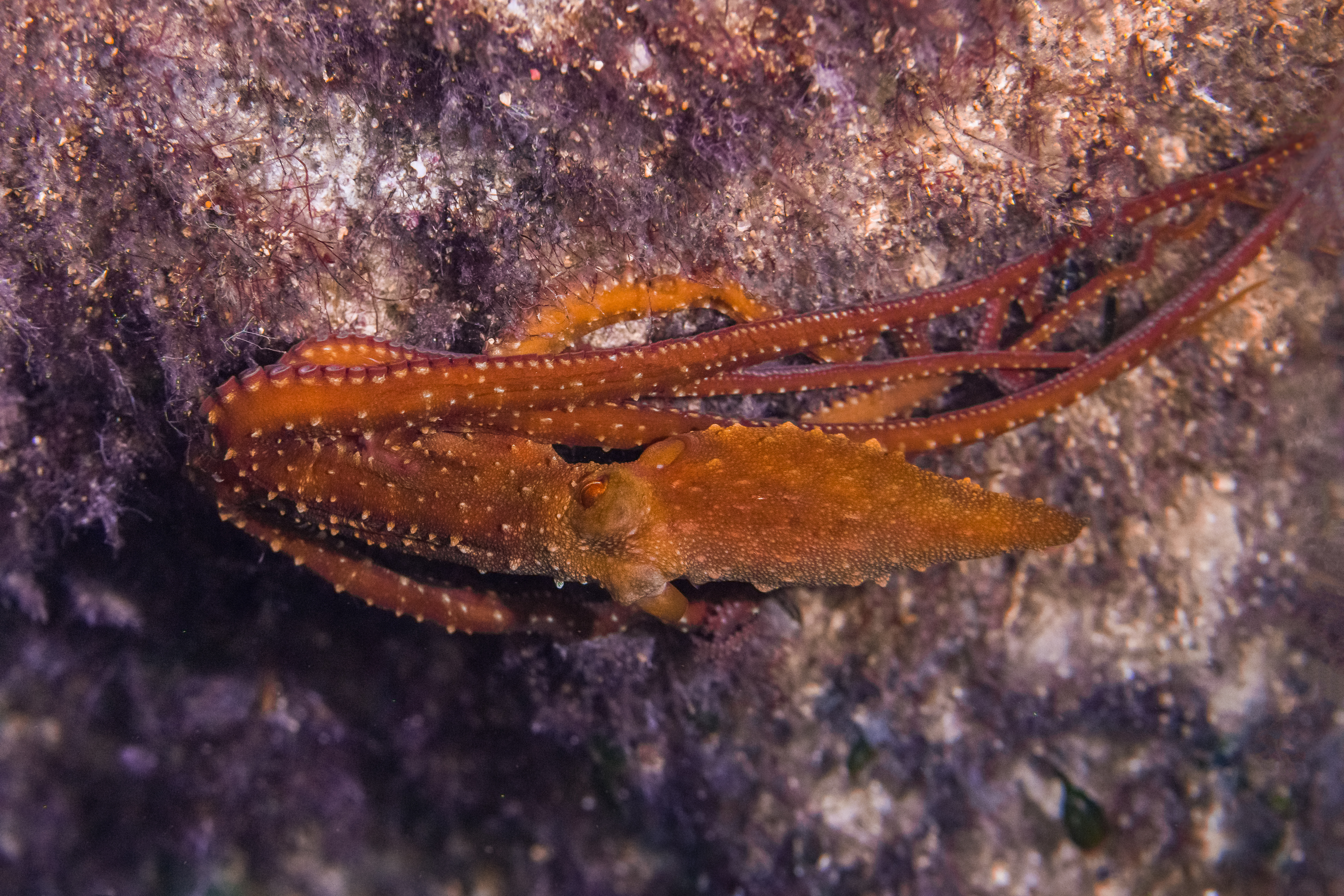
Two juvenile red octopuses hatched from eggs the size of rice grains are now on public display at La Jolla's Birch Aquarium, capping a 10-month effort that experts believe is the first time the species has been raised from hatchling to juvenile in aquarium care anywhere in the world.
The octopuses went on display Wednesday, Aug. 19, in a nursery habitat inside the Coastal California section of the Adam R. Scripps Living Seas Gallery. A divider separates the tank into two spaces so the animals can grow side by side without harming each other.
Maddy Tracewell, senior aquarist of animal health at Birch Aquarium, led the project. A female red octopus in the aquarium's collection laid a clutch of eggs on June 7, 2025, and they completed hatching Oct. 16, 2025, according to the San Diego Union-Tribune. Tracewell guided the rearing effort from that point forward.
Initial estimates put the hatch at more than 3,000 octopuses. Tracewell later told the Union-Tribune the number was closer to 8,000 or even 10,000. Six reached the juvenile stage. Two are now on display.
"Turns out it takes about nine months for them to become juveniles," Tracewell told lajolla.ca. That timeline was previously unknown because no one had raised the species through its full early life cycle in captivity.
Red octopuses are a "small-egg" species. Their hatchlings drift as planktonic paralarvae before settling on the seafloor. To keep the tiny animals alive, Tracewell built a custom upwelling system that pushed water gently from the bottom of the tank upward, mimicking the open ocean. She also had to solve a food puzzle: brine shrimp lacked a key fatty acid, and mysid shrimp were too fast for the paralarvae to catch. Grass shrimp babies proved the right size, speed and nutrient profile.
Tracewell consulted Dr. Dan Shigeki, a professor at Tokyo University of Marine Science and Technology and one of the world's leading experts on octopus paralarvae, throughout the process. In a March 2026 Birch Aquarium statement, Shigeki said he was glad to share his research with the aquarium, noting it could help deepen understanding of octopus biology.
As the octopuses matured, their camouflage sharpened. Their eyes developed horizontal pupils, their bodies grew more opaque as light-reflecting cells called leucophores formed, and skin papillae along their heads gave them finer control over texture, according to ABC 10 News.
Tracewell presented her findings at the 2026 Regional Aquatics Workshop and won the Best First-Time Presenter Award, according to Fox 5 San Diego. She said she plans to share her methods with aquarium colleagues and scientists worldwide.
Red octopuses live about two years and can grow to roughly 20 inches. They range along the Pacific coast from central Alaska to northern Mexico. In the wild, only about 1% survive to adulthood.
Birch Aquarium, the public exploration center for Scripps Institution of Oceanography at UC San Diego, opens daily at 9 a.m. Visitors can check the daily schedule at aquarium.ucsd.edu/daily-schedule.