A natural enzyme can accurately read a synthetic genetic alphabet double the size of nature's four-letter code. UC San Diego researchers reported the finding Wednesday, Sept. 2, in a study published in Nature Communications.
The discovery matters for La Jolla's biotech corridor because it provides a molecular foundation for engineering biological systems that produce compounds or perform functions no natural organism can. Earlier work with expanded genetic alphabets has already yielded synthetic DNA molecules capable of recognizing liver cancer cells.
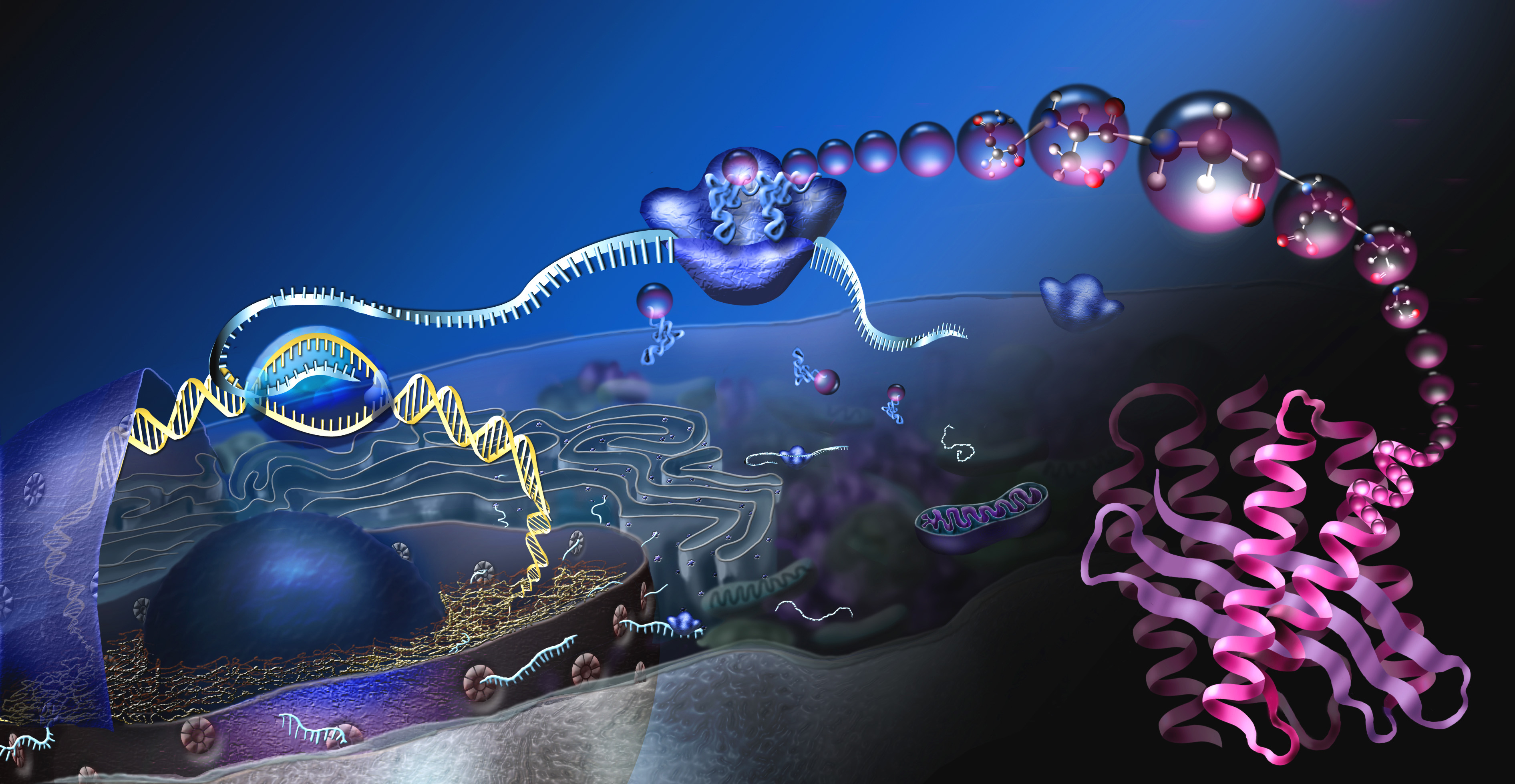
Dong Wang, a professor at the UC San Diego Skaggs School of Pharmacy and Pharmaceutical Sciences, led the study. His team focused on RNA polymerase, the enzyme responsible for reading DNA and producing RNA in the first step of gene expression.
All known life uses a four-letter genetic code.
Wang's group showed that RNA polymerase from Escherichia coli bacteria can recognize and incorporate two synthetic base pairs not found in nature, expanding the working alphabet to eight. The expanded system is known as the Hachimoji alphabet, a name drawn from the Japanese words for "eight" and "letter."
The team used biochemical experiments and high-resolution cryo-electron microscopy to capture structural snapshots of the enzyme at work, according to a UC San Diego press release. Those images showed that the enzyme recognizes synthetic DNA letters through the same biochemical signals it uses for natural ones. That helps explain how expanded genetic information can be faithfully transcribed by existing cellular machinery.
Wang said the findings provide evidence that cells can process synthetic genetic information using their natural molecular machinery, advancing a long-standing goal in synthetic biology to expand the language of DNA.
In a related study published Aug. 12 in the Proceedings of the National Academy of Sciences, Wang's team reported that RNA polymerase can also handle a pair of synthetic base pairs that lack hydrogen bonds, the chemical links that normally hold base pairs together. Co-authors on that paper include Qingrong Li, Peini Hou, Juntaek Oh, Yan Liu, Hui Pen Tan and Jenny Chong, among others.
The university said the research could allow scientists to custom-engineer biological systems for new diagnostics, therapeutics and other applications beyond what natural DNA can support. No specific product development timeline or industry partnership was announced.
The PNAS study broadens the range of synthetic letters the enzyme can process, and both papers together give researchers a wider toolkit for building genetic systems from scratch.