La Jolla's Salk Institute has identified more than 1,000 previously unknown microproteins in the human brain. The findings, published Monday, Sept. 14, in Nature Aging, include a potential new target for Alzheimer's disease research.
The study represents the first atlas of microproteins in the human frontal cortex. The Salk team drew on 480 brain samples collected through the Religious Orders Study/Memory and Aging Project (ROSMAP), a long-running cohort based at Rush University. Some samples came from donors with Alzheimer's disease. Others came from healthy donors.
Using custom software and an AI-powered tool called ShortStop, built in the lab in 2025, the team identified 1,067 microproteins that standard research methods had missed. A mass spectrometer confirmed each one by physically detecting peptides, the proteins' building blocks.
Microproteins are a smaller class of proteins that play roles in health and disease but have been difficult to find because of their size. The atlas gives researchers a downloadable database to investigate how these molecules behave in aging and neurodegeneration.
"We still do not fully understand the molecular mechanisms of healthy aging, and that is especially true for microproteins, which have been inadvertently overlooked for decades," said Alan Saghatelian, a professor and the Dr. Frederik Paulsen Chair at the Salk Institute, who served as the study's senior author.
The team found that hundreds of the newly cataloged microproteins appeared at different levels in Alzheimer's brain cells compared to healthy ones. Alzheimer's cells tended to express more microproteins overall.
One finding stood out.
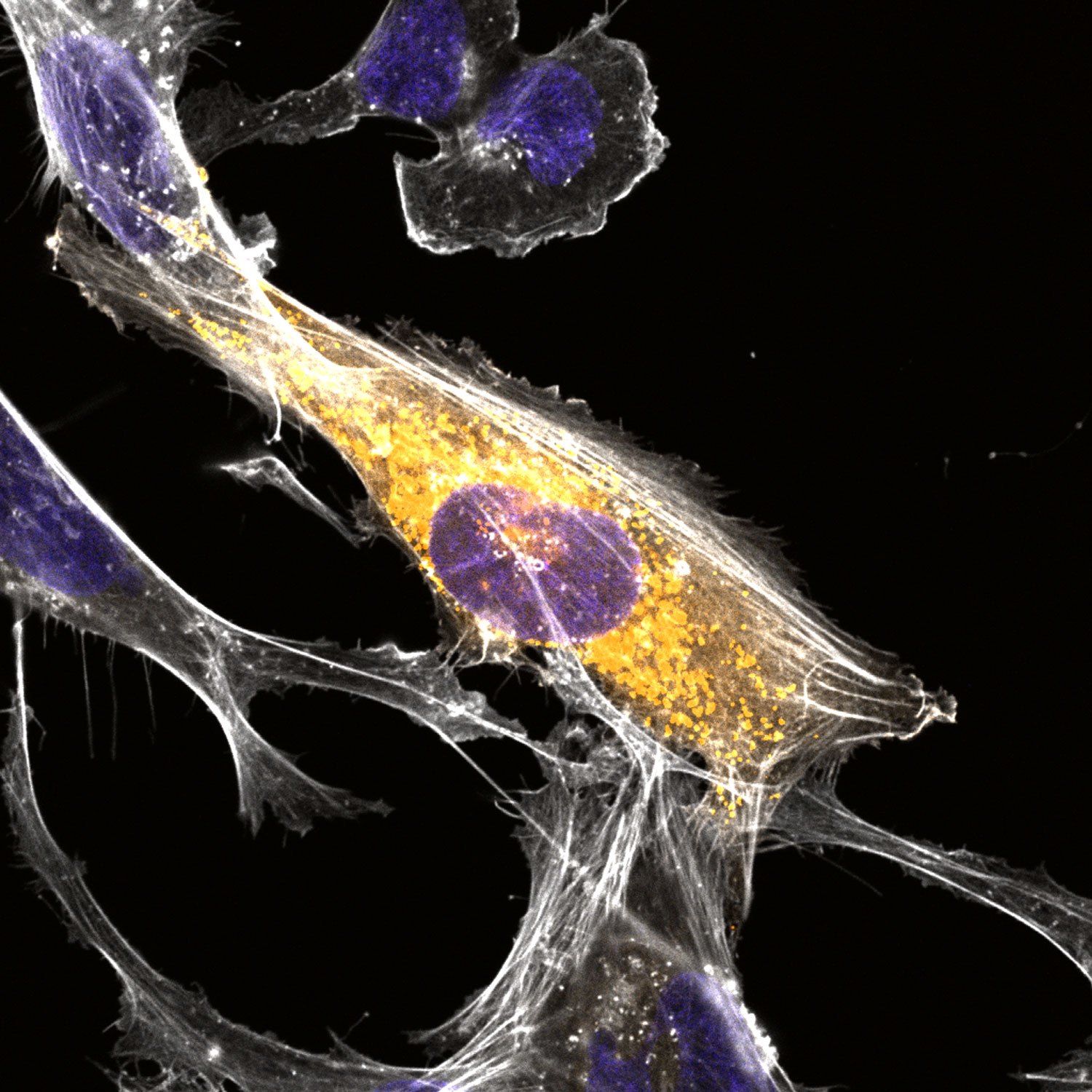
The researchers zeroed in on microglia, the brain's resident immune cells. Those cells were producing a microprotein instead of the full-size protein from the same stretch of genetic code. When the team removed the gene responsible for that microprotein, the microglia's energy-producing mitochondria became impaired.
That result suggests a link between the microprotein and the kind of immune-cell dysfunction commonly seen in Alzheimer's patients, according to the Salk Institute.
Brendan Miller, a postdoctoral researcher in Saghatelian's lab and the study's first author, said the atlas reanalyzed existing data from nearly 500 brains to build an entirely new resource. The database is freely available for other scientists to download.
Co-authors included researchers from the Salk Institute, Scripps Research Institute and Rush University. The National Institutes of Health and the Clayton Medical Research Foundation funded the work.
The Salk team said similar efforts in other brain regions could eventually expand the atlas to cover the entire brain, though no timeline has been set.