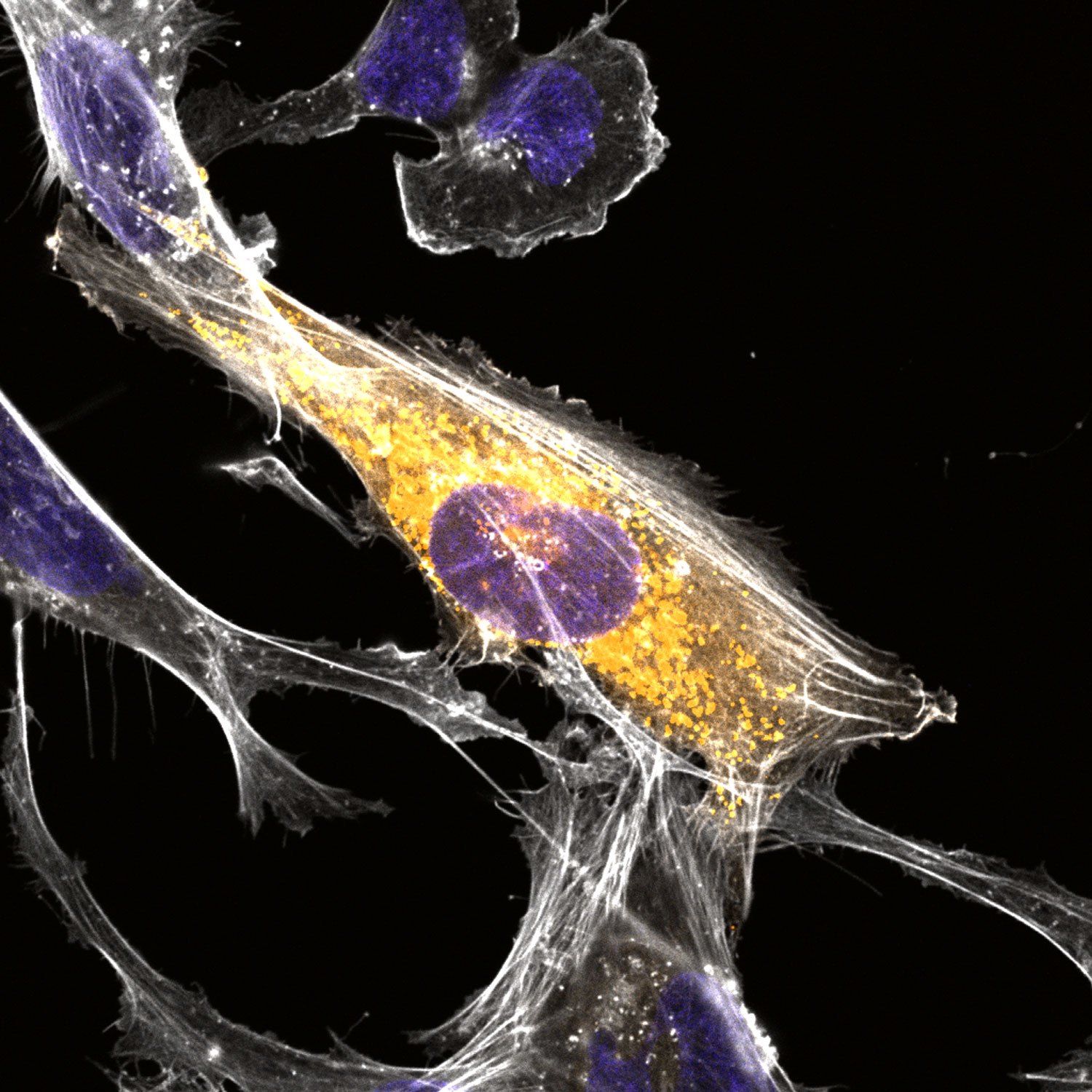
Immune cells in the brain are destroying living nerve cells in mice with ALS, a Salk Institute study published Aug. 15 in Nature Communications found.
The discovery identifies a new mechanism driving the progression of amyotrophic lateral sclerosis in the brain and spinal cord. ALS has no cure and affects about 35,000 Americans, with about 5,000 more diagnosed each year, according to the CDC.
Greg Lemke, a Distinguished Professor Emeritus at the Salk Institute for Biological Studies and the study's senior author, discovered the protein family at the center of the research more than 30 years ago. Those proteins, called TAM receptors, normally help the body recognize and clear dead cells. In ALS mice, the system turned on cells that were still alive.
"The bottom line is, microglia are using the TAM system to eat cells that aren't dead," Lemke said in the Salk Institute's Aug. 20 press release announcing the findings.
The researchers used SOD1 mice, the most common mouse model of ALS, which carry a mutant protein that causes the disease in humans. In the spinal cords of those mice, the team found elevated levels of two TAM proteins, Axl and Mer. Motor neurons were displaying molecules called phosphatidylserine, an "eat me" signal normally reserved for dying cells. That false signal directed immune cells called microglia to consume neurons that were still functioning.
When the team removed Axl and Mer, the result surprised them. The mice got sicker faster but lived longer and preserved more motor neurons and muscle control than mice with the proteins intact.
It is the first time the TAM system has been shown to target living cells, according to the Salk press release.
Youtong Huang, the study's first author and a former graduate student researcher in Lemke's lab, cautioned in the Salk Institute's Aug. 20 press release against reading the results as a simple argument for eliminating TAM activity. Therapies targeting the TAM system would also need to address the underlying mechanisms of ALS or other neurodegenerative diseases to be effective, Huang said.
The discovery could reach beyond ALS. Elevated Axl is a hallmark of Alzheimer's disease, according to the Salk press release. A group led by Jun Suzuki in Kyoto has already engineered a TAM-based protein that reduced autoimmune symptoms in mice with lupus and slowed tumor growth in mice with melanoma.
Lemke told Times of San Diego that one of the biggest challenges in ALS research remains that scientists do not know what causes most cases. Existing drug therapies only delay progression without addressing the molecular roots of the disease, he said.
No human trials are scheduled.