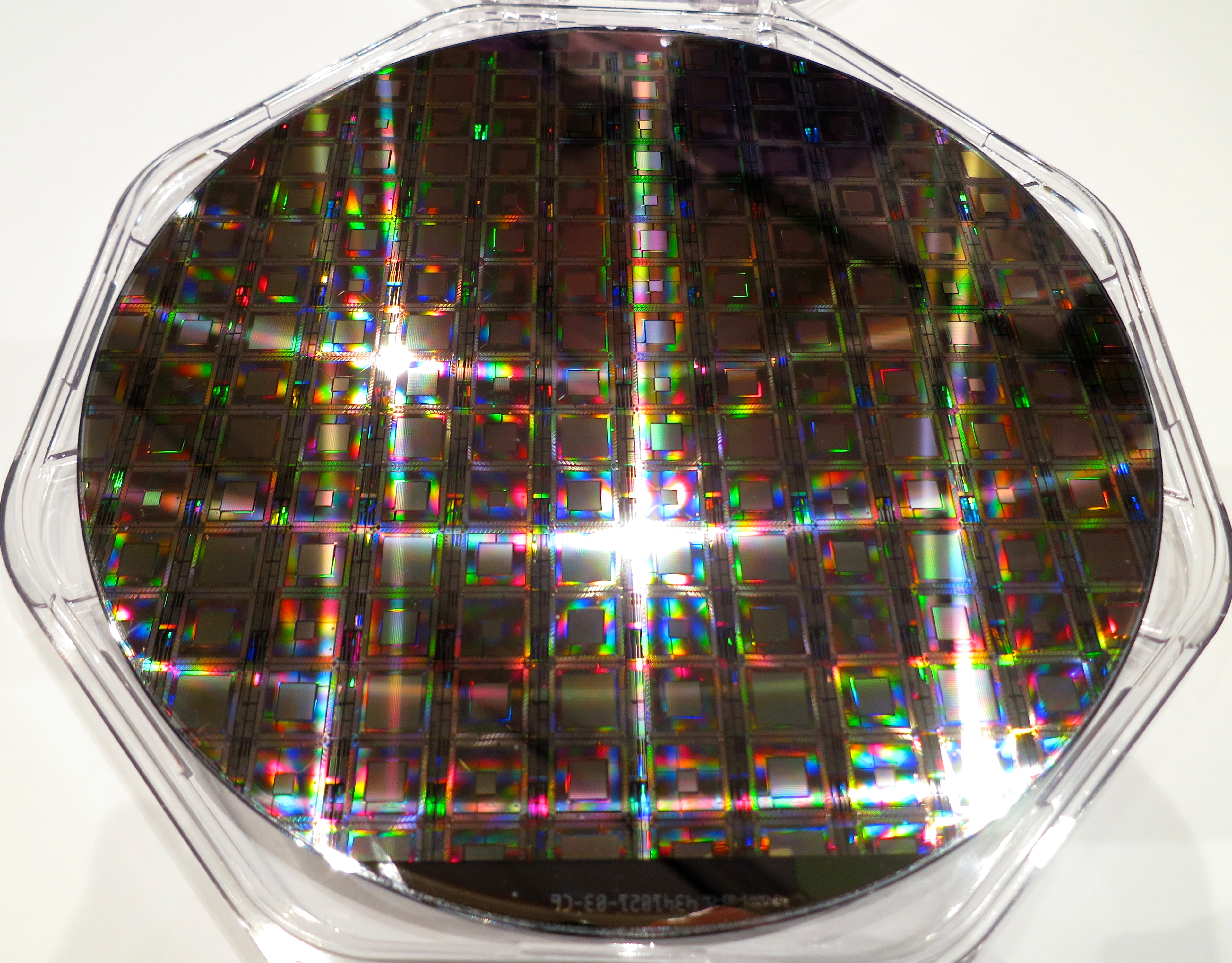
Qualcomm Technologies is giving UC San Diego $500,000 to fund a new research initiative that uses artificial intelligence to design faster, more efficient computer chips.
The gift to UCSD's Halıcıoğlu School of Data Science and Computing will launch the AI in Microelectronic Systems (AIMS) initiative, the university announced Monday, Nov. 2. The Halıcıoğlu School is adding $250,000 in matching funds, bringing the total to $750,000.
The problem AIMS targets: designing modern semiconductor chips means balancing speed, energy use, memory and the ability to handle different computing tasks. That process still relies heavily on manual work, and costs are growing exponentially, according to the university. AIMS researchers will develop AI methods to cut through that complexity.
Rajesh K. Gupta, dean of the Halıcıoğlu School, said the collaboration gives UCSD "an opportunity to bring together expertise in AI, computing systems and microelectronics to explore fundamentally new approaches to chip design."
The initiative will draw on faculty and researchers across the Halıcıoğlu School and its San Diego Supercomputer Center (SDSC). Professor Yusu Wang has led existing work on AI-assisted chip design. Associate Dean Jinendra Ranka's team built an independent benchmarking system for AI processors. Other participants include Lily Weng, Mahidhar Tatineni, Martin Kandes, Zhijian Liu and Arya Mazumdar.
AIMS research will span processor design, hardware accelerators, memory systems and performance optimization, with a focus on improving energy efficiency. The work covers systems-on-chips, which combine multiple computing components into a single device, as well as larger-scale computing architectures used in cloud computing and AI.
The partnership extends a relationship between Qualcomm and UCSD that has stretched across decades. Qualcomm, headquartered in San Diego, reported $44.3 billion in revenue and spent $9 billion on research and development in its fiscal year ending Sept. 28, 2025, according to its most recent annual filing with the Securities and Exchange Commission (SEC).
Hemanth Sampath, vice president of engineering for Qualcomm Technologies, called UCSD "one of Qualcomm's most valued academic partners." He said the company is "proud to support the AIMS initiative and collaborate with UC San Diego researchers to advance AI-enabled system and semiconductor design …" and to help speed the next generation of computing innovation.
The gift comes with no strings attached. Qualcomm's contribution carries no requirements for research deliverables, services or reporting, according to the university, letting UCSD direct the funds toward its own research and educational priorities.