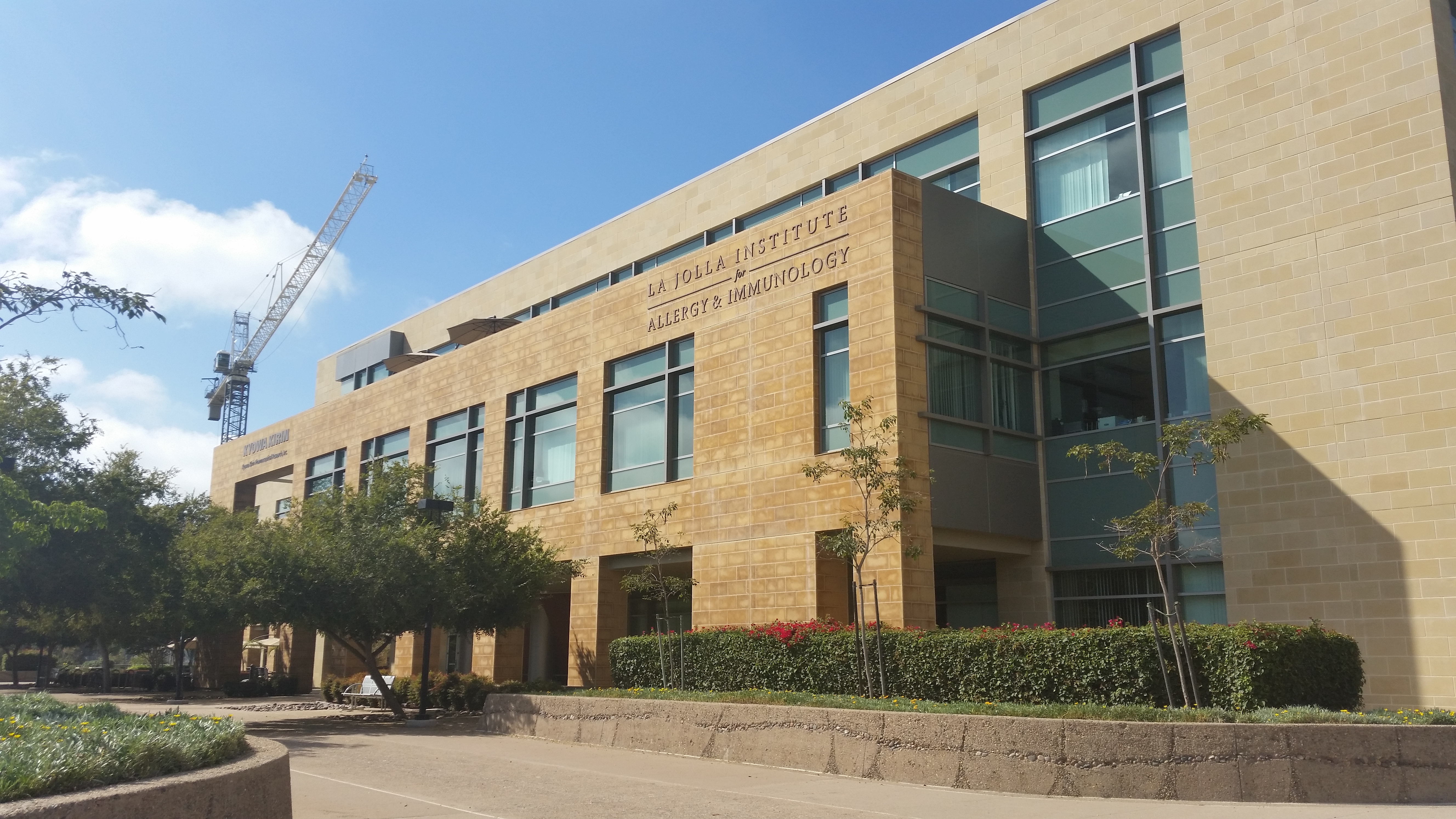
La Jolla's immunology research institutions could compete for billions in state funding under Proposition 38, an $8.4 billion bond measure on the November 2026 ballot.
The measure would direct half the money to a single UCLA-affiliated institute and award the other half through competitive grants to public and nonprofit research institutions across California, according to the state Legislative Analyst's Office. Seven University of California chancellors, including UC San Diego's, would each appoint a representative to the executive committee that sets research priorities and grant criteria, according to the initiative's text.
The bond arrives as federal funding cuts squeeze La Jolla labs. Six San Diego research institutes, including the La Jolla Institute for Immunology, the Salk Institute for Biological Studies, Scripps Research and UC San Diego's Moores Cancer Center, saw combined cancer grant funding fall 16%, from about $103 million to $87 million, between fiscal years 2024 and 2025, NBC 7 San Diego reported.
UC San Diego alone faced an estimated $150 million in federal funding losses after the Trump administration began cutting National Institutes of Health (NIH) and National Science Foundation grants in February 2025, the UCSD Guardian reported in January.
Shane Crotty, chief science officer at the La Jolla Institute for Immunology, told the Yes on 38 campaign in a June 29 article that the federal pullback has driven researchers out of the field. "It feels like you've got a team of people rolling a boulder up a hill," Crotty said. "So if you have a pause in the resources, some of those people are leaving, the boulder definitely starts going back down the hill …"
At least $4.2 billion of the bond must go to cancer, heart disease and Alzheimer's disease research. Under the initiative's terms, any drug or treatment developed with bond funds must be sold to California patients at a price at least 20% below the national average. Ten percent of licensing proceeds would return to the state to offset bond costs.
The measure is backed by billionaire orthopedic surgeon and medical inventor Gary K. Michelson, who pledged $120 million in 2024 to launch the California Institute for Immunology and Immunotherapy (CIII), a UCLA-affiliated center expected to open in 2027. A CalMatters investigation found that the initiative's eligibility criteria for the designated institute exclude all but CIII, the Orange County Register reported.
The bond's total cost to taxpayers is estimated at roughly $12 billion with interest, or about $500 million a year from the state General Fund for 25 years, according to the Legislative Analyst's Office.
Critics say the structure funnels public money to one institution. Robert M. Kaplan, a senior scholar at the Stanford School of Medicine Clinical Excellence Research Center who co-chairs the No on Prop. 38 campaign, wrote in the official ballot argument against the measure that California "can and should support medical research through more coordinated, sustainable policies."
State Sen. Scott Wiener, who authored a competing $7.5 billion broad-science bond awaiting Gov. Gavin Newsom's signature for the March 2028 ballot, told CalMatters in a Sept. 5 report that Prop. 38 "primarily funds one particular institute."
Voters will decide on Proposition 38 in November. No endorsement or opposition from UC San Diego, the Salk Institute or Scripps Research appeared in public records as of Monday, Sept. 7.