Scientists at La Jolla Institute for Immunology have identified a molecular reason Ebola virus causes deadly inflammation in humans but not in bats.
The findings are described in a study in the journal Cell, announced by LJI on Nov. 18. The research comes amid an Ebola outbreak in the Democratic Republic of Congo. That outbreak has caused over 10,500 confirmed cases and over 5,130 deaths, according to the U.S. Centers for Disease Control and Prevention. Illnesses from Ebola virus and its relatives carry about a 50 percent fatality rate in humans, LJI said.
LJI Professor, President and CEO Erica Ollmann Saphire led the study alongside researcher Jingru Fang, who led the research as a member of the Saphire Lab at LJI. The team collaborated with researchers at Princeton University and UC San Diego.
Saphire called it a puzzle that the worst Ebola cases tend to have the strongest inflammatory responses. "These are strong immune responses, but they're not working well," she said, according to LJI.
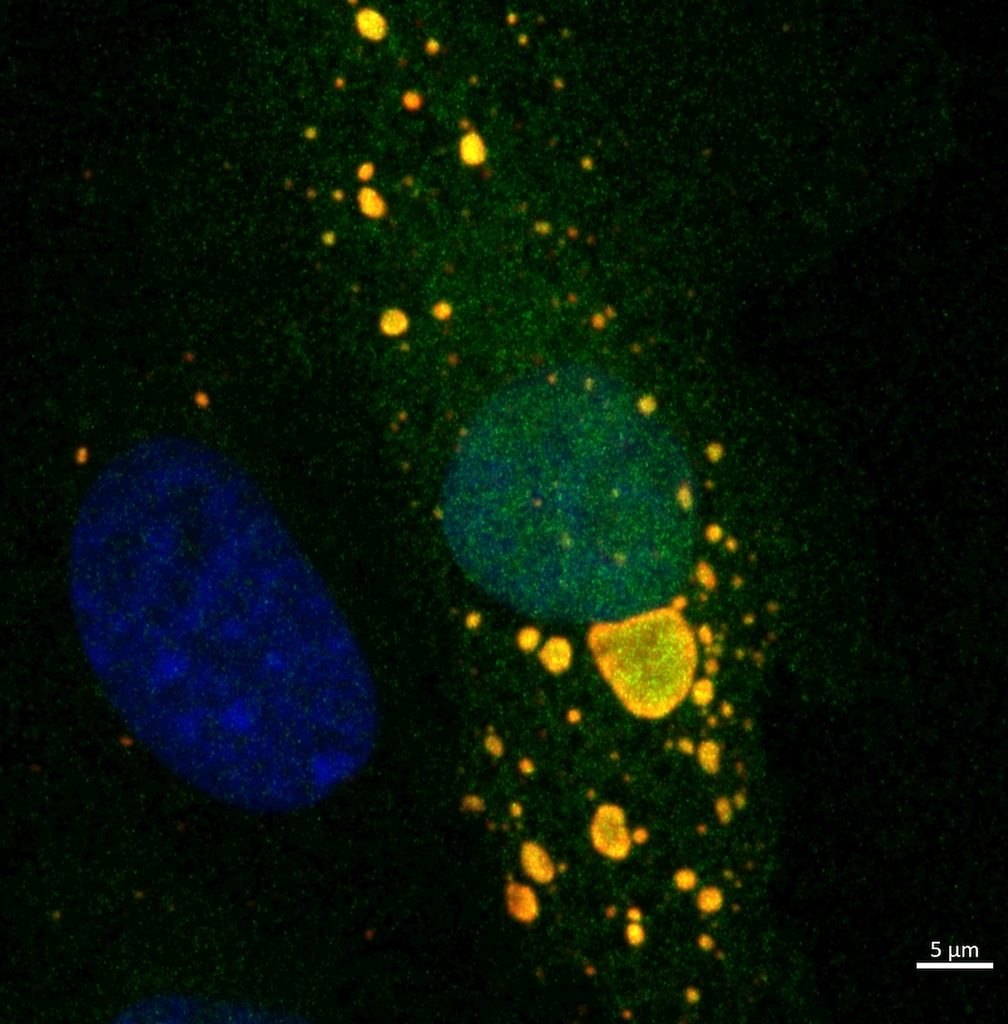
The answer, the researchers found, involves what they call viral "nests." When Ebola virus enters a host cell, it builds bubble-like structures called viral condensates. The virus stores its own genetic material inside these compartments.
Using a technique called spatial transcriptomics, the team discovered that Ebola virus also traps human cellular mRNA molecules inside these nests. mRNA molecules carry instructions from genes to build proteins. In a healthy cell, mRNAs do their jobs and then break down.
That breakdown matters.
Certain mRNAs direct the body's rapid antiviral defense, called the type I interferon response, or IFN response. Cells are supposed to turn that defense on briefly, then shut it off before it damages healthy tissue.
When Ebola's viral condensates shield those mRNAs from breaking down, the defense stays switched on. Cytokine production stays "on," and inflammation overwhelms the body. Fevers spike and organs fail.
"The antiviral response is like a weapon, and cells use degradation as a way to deactivate that weapon," Fang said, according to LJI.
Bats tell a different story. The researchers examined mRNAs from Egyptian fruit bats, a known reservoir species for the related Marburg virus. Bat defense mRNAs fold differently from human mRNAs and were not pulled into viral condensates nearly as often. That difference appears to let the bat immune system control Ebola virus while keeping harmful inflammation in check, according to Fang.
Fang cautioned the findings are a starting point. "We don't know whether this difference can explain everything, but it gives researchers a place to start looking and confirm what we've found in additional human or animal samples," Fang said.