Scientists at the La Jolla Institute for Immunology have shown an experimental Zika vaccine can protect mice through T cells alone. The finding sidesteps the antibody-based approach that has complicated Zika vaccine design because of enhancement risks.
The study, published Tuesday, Aug. 25, in Nature Microbiology, was led by LJI Professor Sujan Shresta, Ph.D., alongside co-authors Annie Elong Ngono, Ph.D., a research instructor, and visiting scientist Kantinan Chuensirikulchai, Ph.D. The team of 17 researchers compared two experimental Zika vaccines in mice bred to be susceptible to the virus.
Both vaccines were built around Zika's outer envelope proteins. One used those proteins as they occur in nature. The other carried mutations in a region called the fusion loop, the site that generates most of the cross-reactive antibodies linked to antibody-dependent enhancement, or ADE.
Why ADE matters locally
ADE occurs when antibodies raised against one virus bind a closely related virus without neutralizing it, potentially ferrying the pathogen into immune cells and worsening infection. Because Zika and dengue share nearly identical envelope proteins, a Zika vaccine that relies on antibodies could leave recipients more vulnerable to severe dengue.
That risk hits close to home. San Diego County recorded its first locally acquired dengue cases in 2024, according to the LJI press release. A CDC report published in May 2026 confirmed California logged 18 locally acquired dengue cases across three counties in 2024, part of a national total of 3,798 cases representing a 359% increase over the 2010–2023 annual average.
What the team found
The unmodified vaccine produced both antibodies and T cell responses. When researchers transferred CD8+ T cells, a type of immune cell that finds and destroys virus-infected cells, from vaccinated mice into unvaccinated animals, those cells alone reduced Zika virus levels.
The fusion-loop mutant vaccine told a different story. Its antibodies looked similar in lab assays but failed to protect animals when transferred. Removing CD8+ T cells eliminated the vaccine's protection entirely.
"This vaccine wasn't protecting via antibodies," Shresta said. "It was protecting via T cells."
There was a catch.
Twelve weeks after the final dose, mice given the fusion-loop mutant vaccine were no better off than unvaccinated animals. Mice that received the unmodified vaccine remained protected.
What comes next
Shresta's team is now investigating how to build durable T cell responses that last years after vaccination. The longer-term goal is what the lab calls a "pan-orthoflavivirus vaccine" that could train T cells to fight Zika, dengue and related viruses simultaneously. Shresta has previously shown that T cells can cross-react against several related orthoflaviviruses at once.
No timeline for human trials has been announced. The study was supported by four National Institutes of Health grants and the Prebys Foundation Research Heroes program.
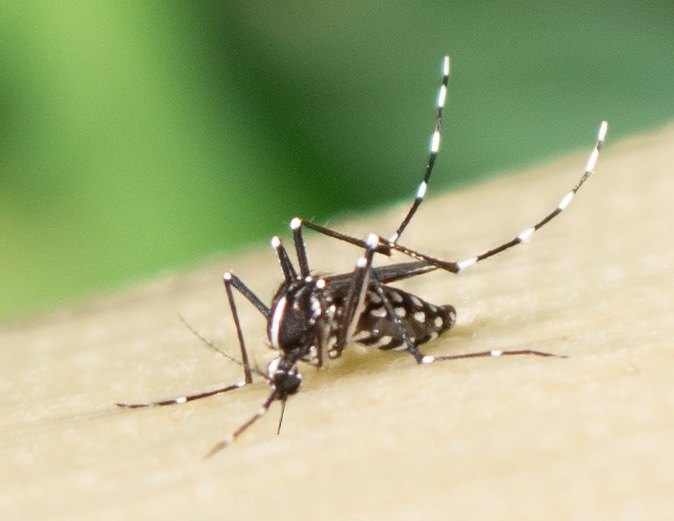
At least 97 countries have reported Zika transmission, according to the World Health Organization (WHO), and no licensed vaccine or specific treatment exists. California is home to two species of Aedes mosquitoes capable of carrying the virus.