Airbnb spent at least $672,198 over four months to defeat a proposed vacation rental tax in San Diego, a Voice of San Diego investigation found.
That sum equals roughly a quarter of all expenditure lobbying reported in the city since 2019. None of the spending was public until after the San Diego City Council Rules Committee voted 3-0 on Jan. 28 to reject the tax.
The findings hit a community with one of the city's highest concentrations of short-term rentals. As of March 2023, the most recent count available, La Jolla had 535 licensed short-term vacation rentals, according to Trudy Grundland of Save San Diego Neighborhoods, who presented the data to the La Jolla Community Planning Association. In Bird Rock, 21% to 33% of oceanfront homes on some streets operated as rentals. Beach Barber Tract had streets at 28%.
What the tax would have done
Councilmember Sean Elo-Rivera proposed the Vacation Home Operation Tax to Preserve Housing in early October 2025. It would have applied to an estimated 10,600 properties and could have generated up to $135 million a year, according to a memo from Elo-Rivera cited by Voice of San Diego.
By the time the Rules Committee heard it on Jan. 28, the proposal had been narrowed to a flat $8,000-a-year tax on homes used as empty second homes or vacation rentals, with $4,000 surcharges for corporate owners and code violators. Elo-Rivera further amended his motion during the hearing to target only corporate and absentee owners.
Councilmembers Kent Lee, Raul Campillo and Vivian Moreno voted no.
Where the money went
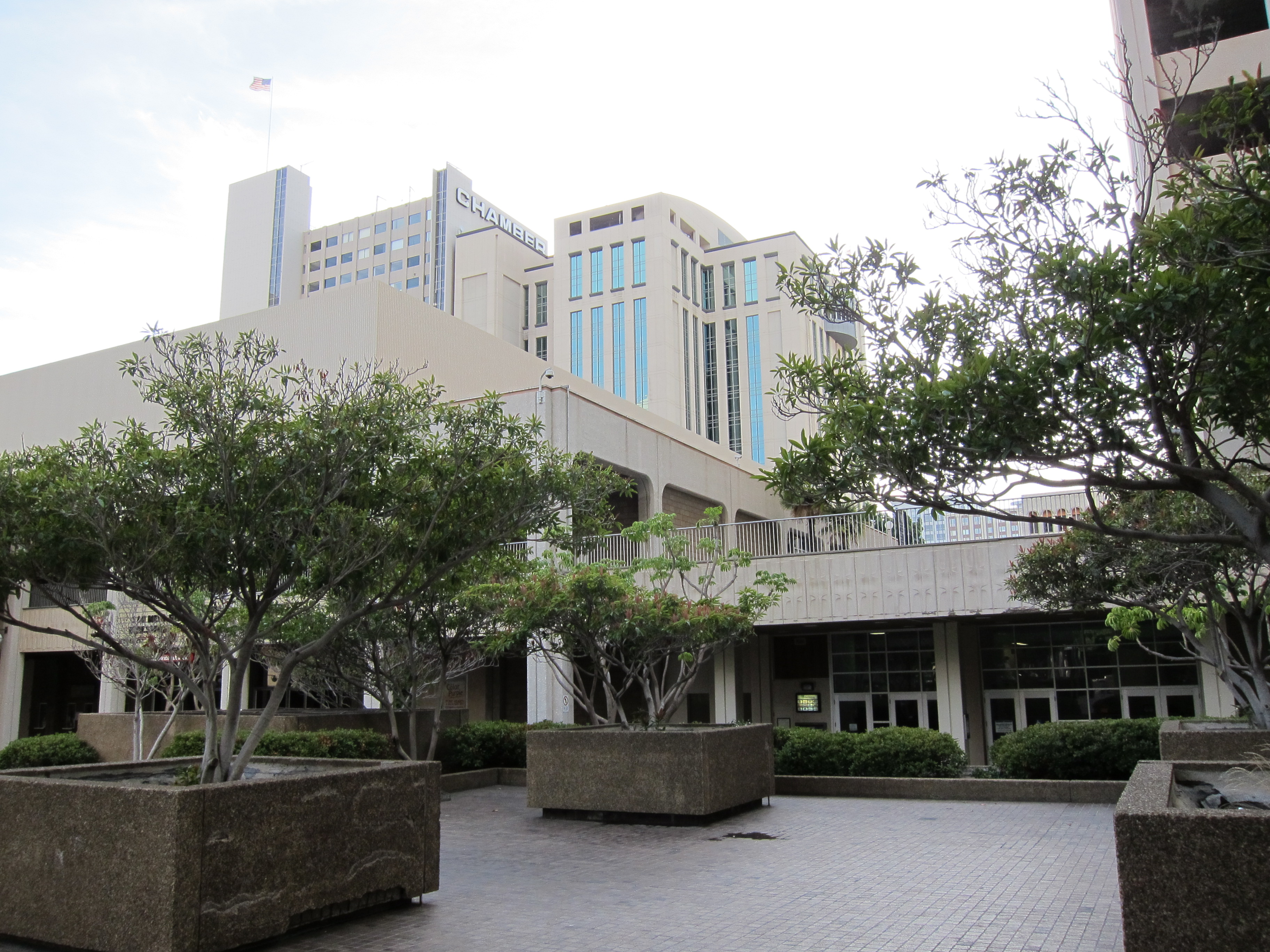
Airbnb reported spending $372,198 under its own name between October and December 2025. A separate filing from the San Diego Regional Chamber of Commerce showed the Chamber spent $292,119 during the same period, with Airbnb identified as the sole source of that money. An Airbnb spokesperson told Voice of San Diego the Chamber's spending was included within Airbnb's reported total, not additive.
A lobbying filing made public on April 28 revealed that Airbnb's political committee, the Committee to Expand the Middle Class, paid $300,000 to Bridge Street Inc., a Los Angeles entertainment company run by former LA City Councilmember Martin Ludlow. State campaign-finance records show the payment was made Jan. 16, 12 days before the Rules Committee hearing.
On the day of the vote, dozens of people showed up at City Hall holding signs against the tax. Voice of San Diego reported that one attendee said she had been paid to attend and had traveled from Los Angeles with 45 others from an LA-based group called Urbano Strategies.
The Chamber's mailers and text messages identified the Chamber as the sender or cited a coalition of labor and business organizations. They did not disclose Airbnb as the funding source.
Chris Cate, CEO of the San Diego Regional Chamber of Commerce, told Voice of San Diego the Chamber's opposition was unrelated to Airbnb's funding. Voice of San Diego reported that Airbnb did not directly respond to questions about the payment to Bridge Street Inc.
What comes next
Elo-Rivera has proposed a "follow the money" ordinance that would require expenditure lobbyists to report spending within 24 hours instead of waiting until the end of the following month after a quarter closes. It would lower the reporting threshold from $5,000 to $1,000 and require organizations to identify the original source of money even when it passes through another group.
"I'm going to make sure that they're not wearing brass knuckles when they get in the ring," Elo-Rivera told Voice of San Diego.
The disclosure ordinance is scheduled to come before the full San Diego City Council in September. Meeting agendas and public comment instructions are posted at sandiego.gov.