UC San Diego computer scientist Yufei Ding is co-leading a new $37.5 million federal effort to build self-correcting quantum computers.
The U.S. National Science Foundation (NSF) awarded the grant to a multi-university center headquartered at Yale University, the university announced Wednesday, Aug. 26. Ding, an associate professor of computer science and engineering at the Jacobs School of Engineering, is a co-principal investigator on the five-year project.
The center is formally called the NSF Quantum Leap Challenge Institute for Physics and Engineering of Practical Quantum Error Correction, or NSF PRACTIQAL. It brings together computer scientists, chemists, physicists and engineers from multiple universities to tackle what researchers call the central barrier to useful quantum machines: errors.
Qubits are fragile. These basic units of quantum information can be corrupted by noise and environmental interference far more easily than the ones and zeros in a conventional computer. PRACTIQAL aims to detect and fix those errors faster than they occur.
Ding's role
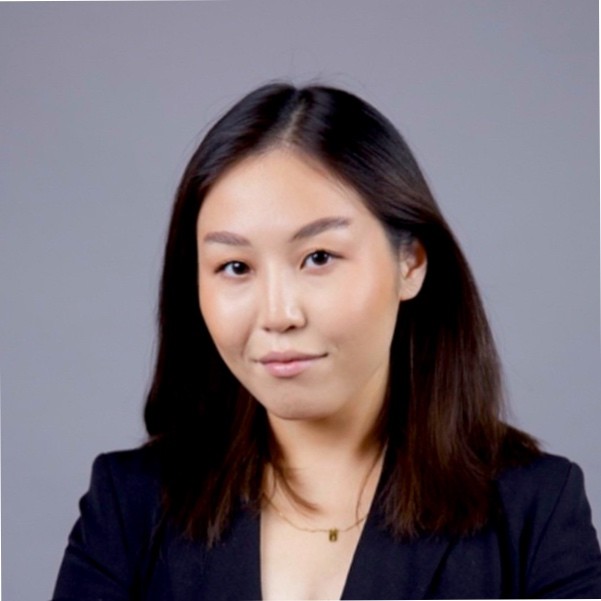
Ding leads the center's thrust on quantum error-correction theory, scalable fault-tolerant architectures and software toolchain development. Her team will build hardware-aware error-correction codes, design logical instruction sets and qubit layouts, develop high-performance decoders, and create an open-source software stack for simulation, verification and benchmarking across different hardware platforms.
Ding said her team will "lead a multi-institutional effort within PRACTIQAL to turn new error-correction ideas into scalable fault-tolerant architectures and open software tools, helping bridge the gap between promising quantum devices and reliable systems that can solve real-world problems."
Erasure qubits and the national program
PRACTIQAL will focus on two main challenges: making quantum error correction more practical and efficient at scale, and exploring specially designed "erasure qubits" that flag exactly where and when an error has occurred. Members of the PRACTIQAL team pioneered the erasure-qubit concept.
Robert Schoelkopf, Sterling Professor of Applied Physics at Yale, directs the center, according to Interesting Engineering. Michael Hatridge, associate professor of applied physics, serves as co-director.
The grant is one of eight NSF Quantum Leap Challenge Institutes sharing more than $290 million in federal funding, Forbes reported. Three of the eight are new, including PRACTIQAL. The program was created in 2020 under the 2018 National Quantum Initiative Act. The institutes collectively support researchers at 36 universities in 19 states, with more than 30 U.S. companies partnering on the effort.
The five-year project aims to produce a roadmap for building error-correcting quantum computers at industrial scale. Potential applications include materials science and drug design.