Better weather forecasting could help California save 100 billion gallons of water a year, a new Scripps Institution of Oceanography study estimates.
The savings would translate to $100 million to $200 million annually in added water value for farms, cities and households, according to findings published by Scripps on Tuesday, Sept. 1. The study appeared Aug. 24 in the journal Environmental Research: Water.
The research centers on a 12-year-old program called Forecast-Informed Reservoir Operations, or FIRO. Run by Scripps' Center for Western Weather and Water Extremes (CW3E) alongside the U.S. Army Corps of Engineers, the California Department of Water Resources and local water agencies, FIRO uses improved forecasts of atmospheric rivers and precipitation to help dam operators decide when to release water ahead of storms and when to hold more back.
Lead author Tom Corringham, a Scripps economist, and staff researcher Denali Pinto evaluated 20 of California's largest reservoirs. Those 20 account for more than 20 million acre-feet of storage, roughly half the state's surface water capacity. Across them, FIRO could add about 315,000 acre-feet per year. In wet years, that figure rises to nearly 500,000 acre-feet, or 162 billion gallons, enough for more than a million households.
Corringham called the savings estimate conservative. Ripple effects including recreation, power generation, fishery improvements and flood-risk reduction would push the total higher, he said.
Under a higher-gain scenario, the researchers projected roughly one million acre-feet of additional water and nearly $460 million per year in direct agricultural and urban benefits.
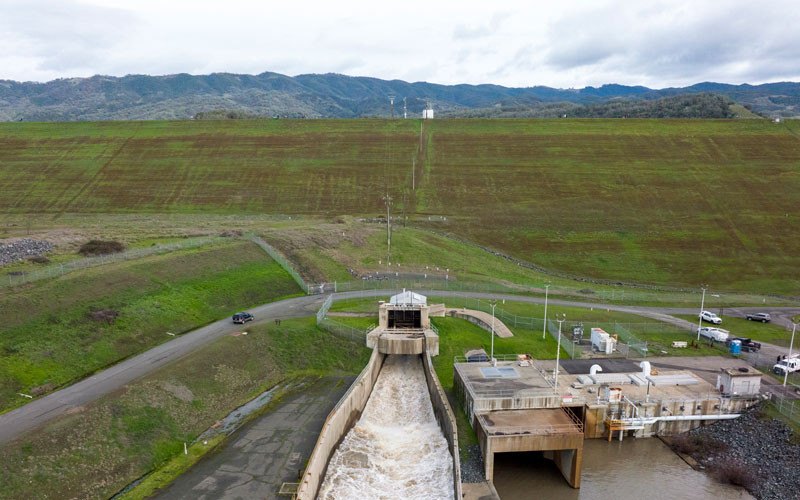
Pilot projects at Lake Mendocino, Prado Dam, Lake Oroville and New Bullards Bar laid the groundwork for the broader analysis. Maj. Gen. Jason Kelly, deputy commanding general for civil and emergency operations at the Army Corps, pointed to early results at a recent FIRO summit. Kelly said the program retained enough water at one pilot site to supply about 250,000 homes for a year. "That is an economic value of roughly $125 million, just from operating smarter," Kelly said, as quoted in the Scripps announcement. "We didn't pour new concrete. We didn't build a new dam. We used better science."
The research arrives as California faces a new mandate. The state Legislature has directed the Department of Water Resources to identify nine million acre-feet of additional water supply by 2040. The study's authors said FIRO could contribute meaningfully toward that target.
No San Diego County reservoir was named among the 20 evaluated. Still, the region's water supply adds context: long-term drought has reduced Colorado River system storage to about 36% of capacity, according to a June 2026 multi-state water agreement report. The San Diego County Water Authority has said its region has sufficient supplies through at least 2050 under multiple drought scenarios.
The study's authors recommend detailed reservoir-by-reservoir analyses before any statewide expansion. No timeline for those follow-up studies has been announced.