Scripps Institution of Oceanography hired six researchers for the 2026-27 academic year, adding expertise in harmful algal bloom prediction, drought and wildfire, and deep-Earth geophysics to UC San Diego's La Jolla campus.
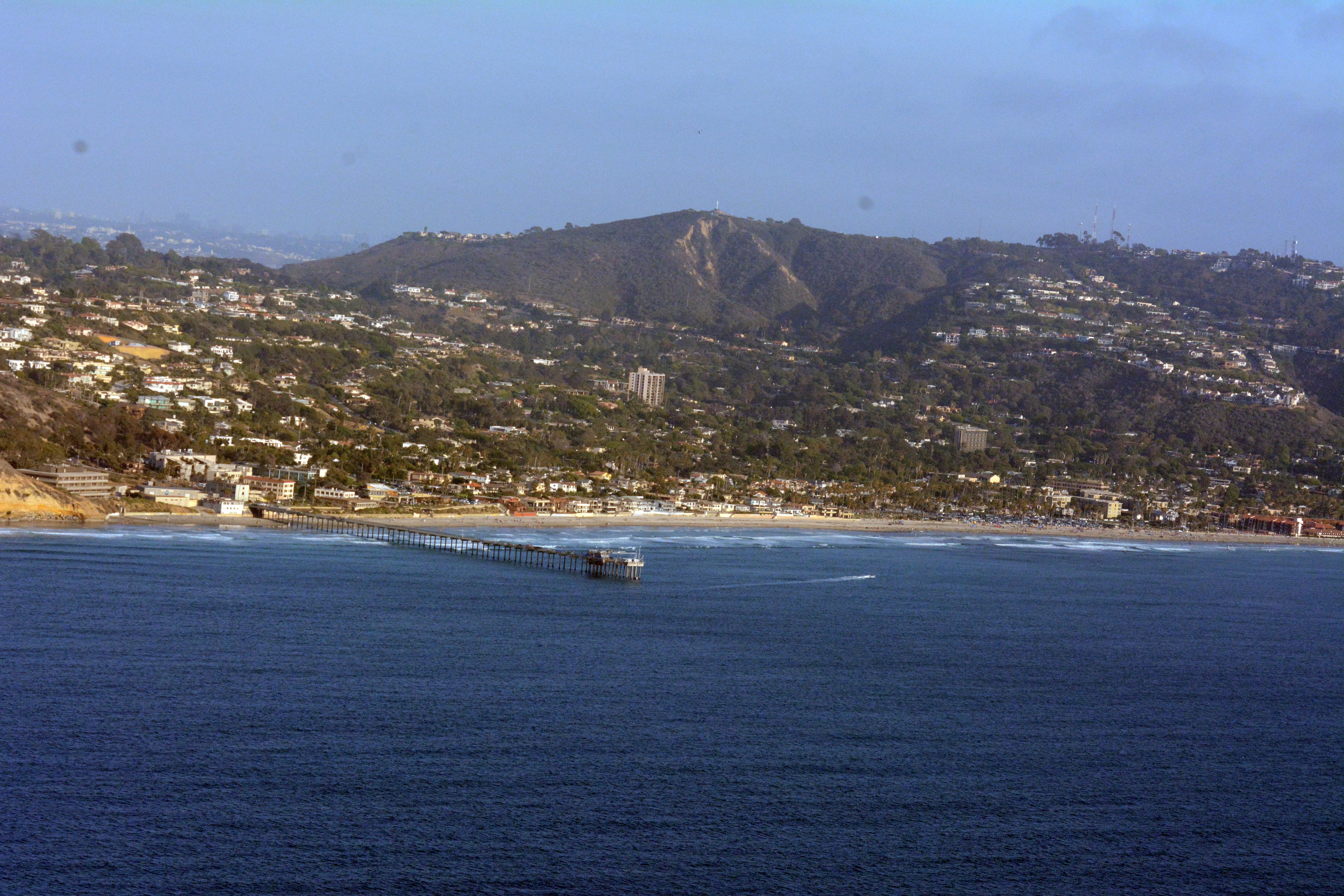
The appointments, announced Wednesday, Sept. 23, by Scripps, arrive as the institution's own scientists track a strong El Niño developing off the California coast. Record-high ocean temperatures were measured at Scripps Pier and all ten of the institution's Shore Stations sites along California as of August 2026, according to a separate Scripps explainer on El Niño's coastal impacts.
Two of the six hires have direct ties to the environmental pressures La Jolla residents are already watching.
Anderson: algal blooms and coastal flooding
Clarissa Anderson, a biological oceanographer who has directed the Southern California Coastal Ocean Observing System (SCCOOS) at Scripps, advanced from a staff role she held since 2016 into a researcher position in the Integrative Oceanography Division this summer. She also directs the Cooperative Institute for Marine, Earth, and Atmospheric Systems (CIMEAS).
Anderson led the development of the California Harmful Algae Risk Mapping system, known as C-HARM, with NASA and NOAA support. Her research focuses on predicting harmful algal blooms and tracking toxins in coastal ecosystems.
"The real mystery lies in whether El Niño conditions will stimulate the ocean to produce toxins, thus forming a HAB that threatens human and wildlife health," Anderson said in an Aug. 19 Scripps explainer on El Niño's effect on ocean ecosystems.
In a Sept. 4 Fox 5 San Diego report on the developing "super El Niño," Anderson said her group is also predicting coastal flooding. "We'll see a lot of storms. That brings a lot of waves," she said.
Williams: drought, wildfire and a MacArthur fellowship
Park Williams, a hydroclimatologist, joins Scripps as a professor in the Climate, Atmospheric Science and Physical Oceanography division. His research centers on drought and wildfire in the western United States.
Williams received a MacArthur Foundation fellowship in 2023 for work the foundation described as "uncovering new insights into how climate change influences drought, wildfires, and tree mortality." He added a Guggenheim fellowship in 2025, selected from more than 3,500 applicants. He previously held faculty positions at UCLA and Columbia University's Lamont-Doherty Earth Observatory.
His appointment officially begins this fall. He will be on campus starting early 2027.
Four more across geoscience and geodesy
Samer Naif, an assistant professor specializing in marine geophysical imaging of tectonic boundaries and geohazards, grew up in San Diego. He attended Grossmont-Cuyamaca community college, earned his bachelor's degree in environmental engineering at UC San Diego, and completed his PhD at Scripps before holding positions at Columbia's Lamont-Doherty and Georgia Institute of Technology.
Shi Joyce Sim, a geodynamicist studying magma flow at subduction zones and mid-ocean ridges, also earned her PhD at Scripps and returns from Georgia Tech. Both Naif and Sim will be on campus starting early 2027.
Alec Brenner, an assistant professor and geologist, studies magnetic records in rocks as old as 3.5 billion years. He holds a PhD in geophysics from Harvard and completed postdoctoral work at Yale.
Qing Liu, an assistant researcher and geodesist, joined Scripps in early 2026. Her work includes coastal and marine geodesy, gravity-field measurement, and groundwater change monitoring. She completed her PhD at the Technical University of Munich.
Scripps Director and UC San Diego Vice Chancellor for Marine Sciences Meenakshi Wadhwa said the new hires will expand the institution's teaching capacity alongside their research programs.