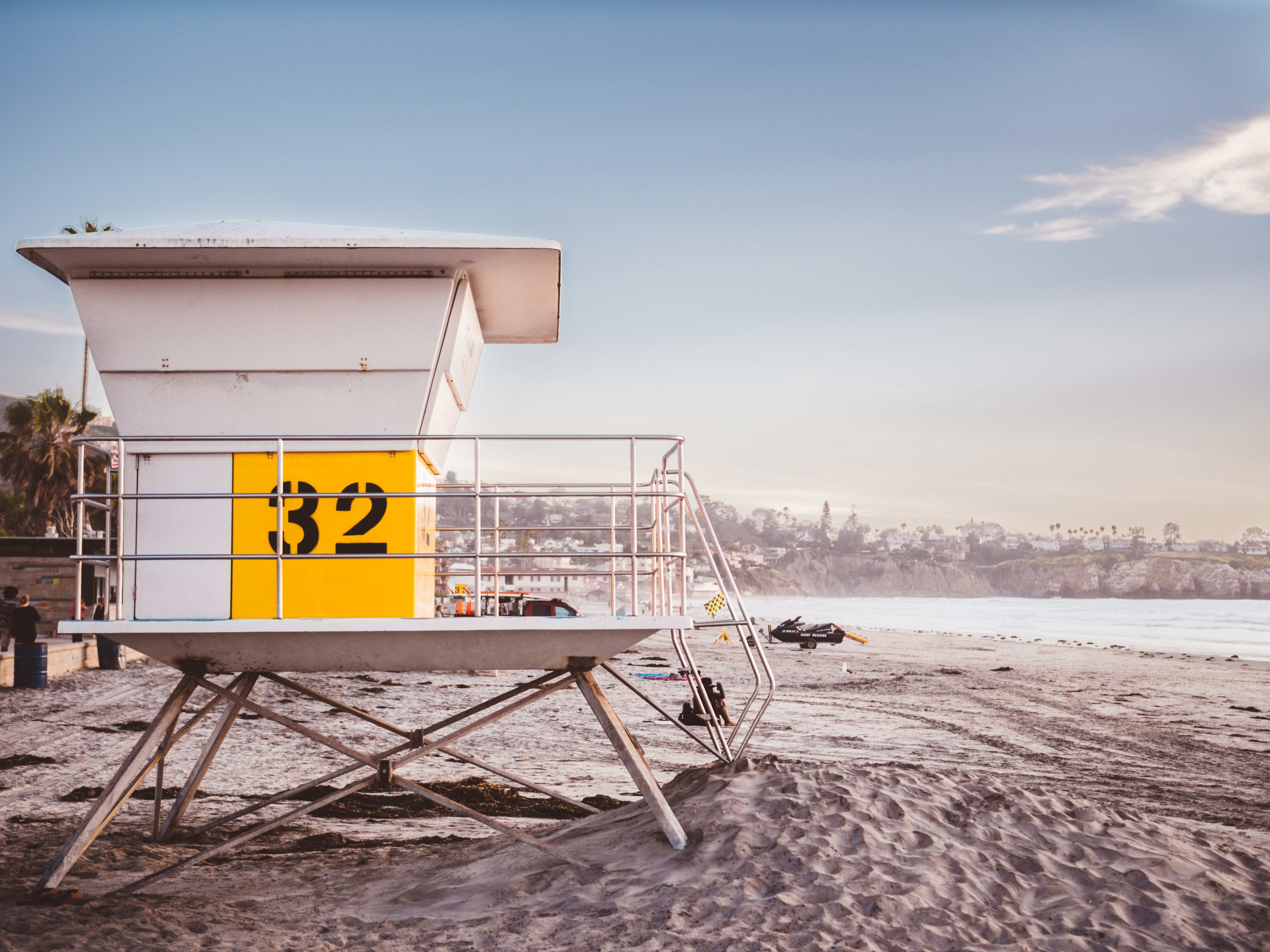
La Jolla beaches have recorded about 400 stingray stings through October, roughly half the 763 reported in 2024 and the lowest total since 2023.
The drop is welcome news for swimmers at La Jolla Shores, Blacks Beach and Scripps Beach. But a Scripps Institution of Oceanography researcher warns that warm El Niño waters could push stingray season into November, meaning the final count is far from settled.
Data obtained through the state Public Records Act and first reported by the Times of San Diego shows the decline across all three beaches. Blacks Beach logged 150 stings through October, down from 278 in 2025. Scripps Beach recorded 46, a fraction of the 304 reported in 2024. La Jolla Shores has stayed below 250 stings every year since 2023, when it hit 376.
The numbers reported to lifeguards likely undercount the real total, the Times of San Diego noted, because many beachgoers never report a sting.
Zach Merson, a Ph.D. student at Scripps Institution of Oceanography, said two forces drive stingray encounters: warmer water and more people wading into it.
"This year, because the water is warmer further into the year, I just expected that peak stingray season will extend, perhaps, through the end of October into November as well," Merson told the Times of San Diego.
A super El Niño has pushed ocean temperatures unusually high along the Southern California coast, according to the Times of San Diego report. Merson said stingrays concentrate in shallow water during low tides, when there is less room for them to spread out. Separately, he said warm, shallow conditions attract both rays and swimmers to the same stretches of beach.
The trend is not uniform across San Diego. Pacific Beach has seen year-over-year increases since 2023, with 2026 stings already surpassing the record set in 2025, according to a companion Times of San Diego report. Lt. John Maher of the San Diego Lifeguards said in that Oct. 21 report that Pacific Beach had already exceeded its full-year 2025 total with three months remaining.
Prevention is straightforward. Lifeguards advise beachgoers to do the "stingray shuffle," keeping both feet on the sand and sliding forward rather than stepping. The technique either spooks a ray before contact or bumps its side instead of its barb, Merson said.
Anyone stung should treat any bleeding, clean and bandage the wound and soak it in hot water no hotter than 110 degrees for 45 minutes to 90 minutes, according to Maher. Emergency call boxes along San Diego beaches connect to a 24-hour dispatch center when lifeguards are off duty.