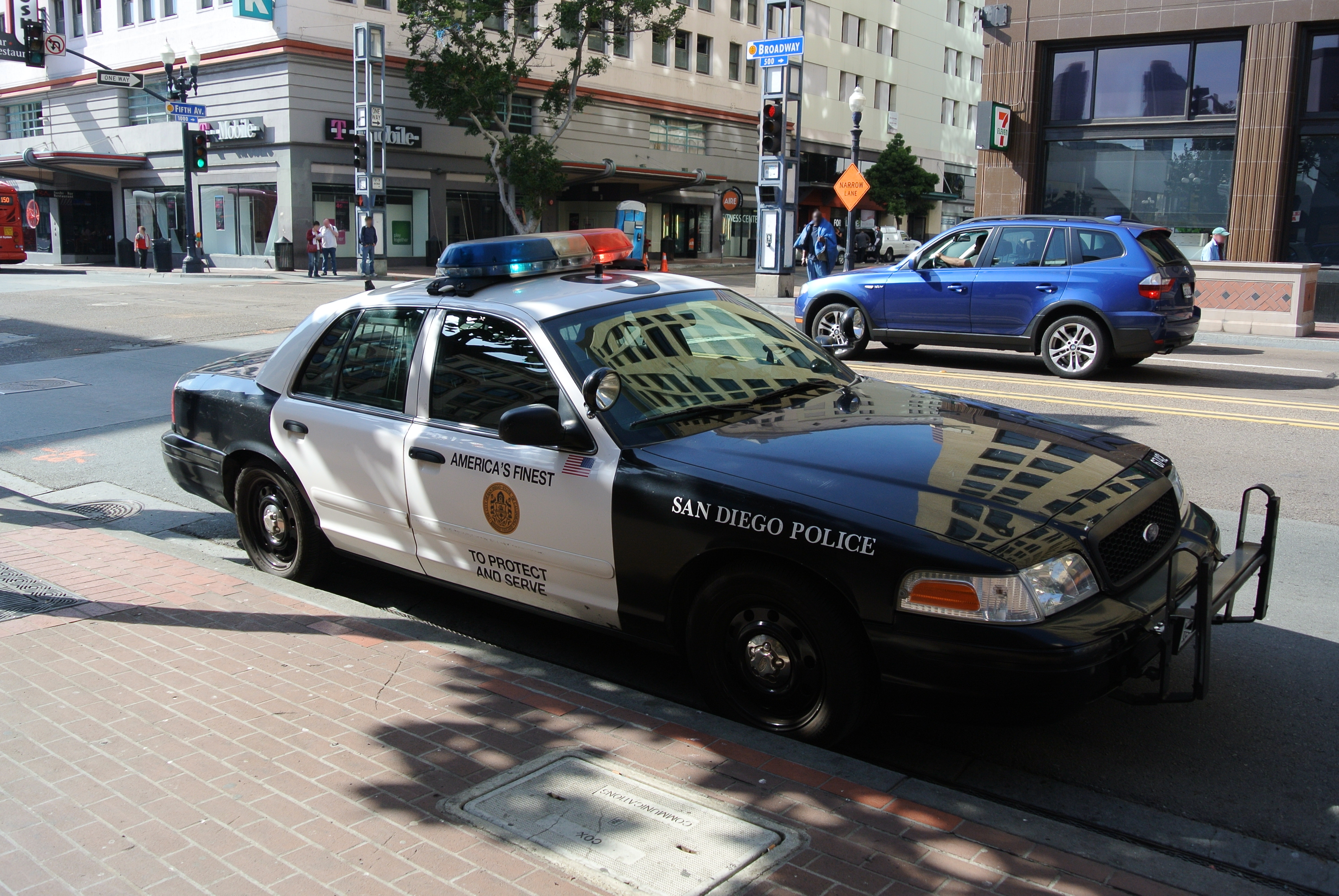
Officer Kohl Idler had barely finished eating when a call came in for a possible injury collision in Mission Bay, cutting short his only break during a 10-hour shift patrolling La Jolla.
That Oct. 27 interruption was routine, according to lajolla.ca, which spent an afternoon riding along with Idler through the San Diego Police Department's (SDPD) Northern Division beat. The picture that emerged: a division stretched thin, where officers juggle phone navigation, dispatch radio, an in-car computer and traffic all at once, and where a single large incident can pull most of the shift's personnel off their regular patrols.
"We'd need a thousand more officers to sufficiently answer radio calls," Lt. John White said during the ride-along, according to lajolla.ca.
"What we have is not enough," Idler said.
A shift that never sits still
Idler and his shift mates start each day at the Northern Division substation on Eastgate Mall, one of nine SDPD patrol divisions citywide. The substation's front desk is closed due to budget cutbacks, lajolla.ca reported.
Each shift opens with a "lineup," where officers gather around a conference table for a department-wide update. Sgt. Kyle Olson assigns patrol beats and partners. White then gives his own briefing. On Oct. 27, he warned of coastal flooding expected in Pacific Beach and near SeaWorld Drive and told officers to prepare to close roads and put up signage.
Officers work four 10-hour shifts per week. Shifts run 6 a.m. to 4 p.m., 2 p.m. to midnight and 9 p.m. to 7 a.m.
Idler noted that 80% of SDPD's fleet is in use all the time, lajolla.ca reported.
One lockdown, one division
On Oct. 27, a lockdown at the Islamic Center of San Diego diverted much of Northern Division's personnel for several hours, according to lajolla.ca. KPBS reported the roughly 90-minute security alert began shortly before 2 p.m. after SDPD learned a woman who had fled police in Carlsbad might be heading to the mosque. The lockdown lifted around 4 p.m. after police confirmed the woman had left San Diego County.
With so many officers tied up, Idler scanned only for high-priority calls and handled several lower-priority calls by phone to save driving time, lajolla.ca reported.
Even without a large incident, officers cannot get to all calls quickly, according to lajolla.ca. Both Idler and White described times food has been abandoned or tossed out a car window as officers flip on lights and sirens to race to an emergency.
"You see just how quickly a day can shift," White said, adding that officers can extend their time on duty by hours if needed.
A citywide pattern
White's assessment echoes what SDPD leadership has said publicly. In May, Chief Scott Wahl told the Los Angeles Times the department was "a thousand police officers short of what we need to handle the call volume we have." Jared Wilson, president of the San Diego Police Officers Association, said in the same report that the department had 200 vacant positions plus 100 officers in training and unavailable for service.
SDPD is budgeted for about 2,000 officers, CBS 8 reported, and the department was operating with those same 200 vacancies and 100 officers still in training. A report from the Peace Officers Research Association of California found the average SDPD response time for Priority 1 calls was 36 minutes, more than 22 minutes above the department's target.
During the four-plus hours of the ride-along, Idler patrolled from La Jolla Shores into Pacific Beach and back, pulled over a golf cart driver about a missing license plate, greeted a toddler with a sticker and stopped at one of the division's "storefronts." Those are small locations scattered through the division where officers can write reports and eat without driving back to the substation, White said.
Residents who need to reach SDPD's Northern Division can call the non-emergency line at 619-531-2000 or dial 911 for emergencies.