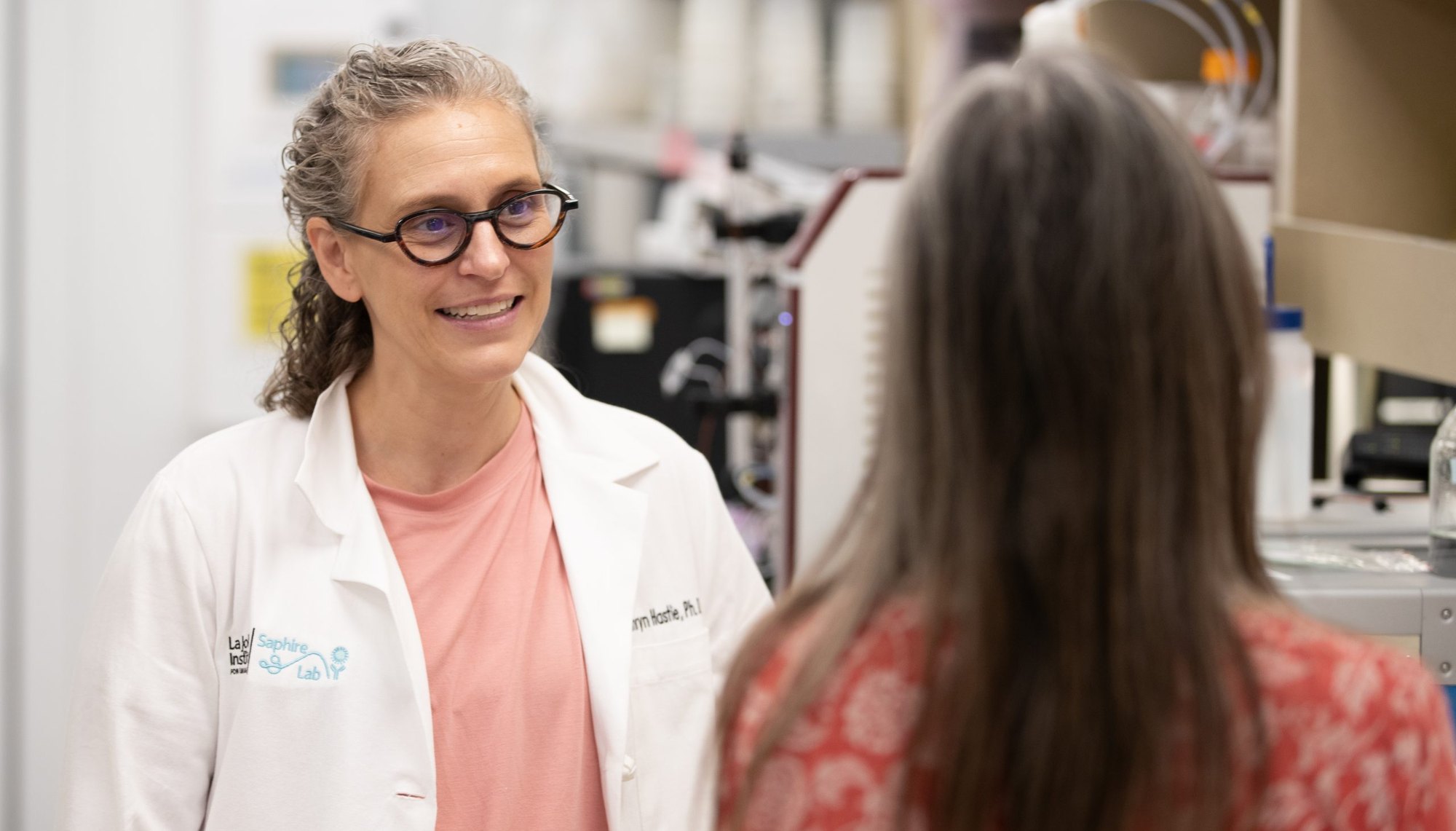
La Jolla Institute for Immunology (LJI) has named Kathryn Hastie a research assistant professor to lead a new lab targeting hemorrhagic fever viruses with no FDA-approved treatments.
Hastie's lab will focus on "New World" arenaviruses, a group of rodent-borne pathogens that cause hemorrhagic fevers across South America, the institute announced Sunday, Oct. 4. The group includes Junín virus, which causes Argentine hemorrhagic fever, and Machupo virus, behind Bolivian hemorrhagic fever.
No FDA-approved treatments or vaccines exist for any of these viruses, according to a Boston University biosafety reference sheet. Convalescent plasma, drawn from survivors' blood, is the only approved therapy for any arenavirus infection. Hastie co-authored a 2023 paper in the Journal of Infectious Diseases documenting that gap.
"Fatality rates are pretty high, 20 to 50 percent, depending on the particular virus," Hastie told LJI.
Rather than fighting one virus at a time, Hastie's lab will hunt for antibodies that can recognize multiple genetically diverse arenavirus species and block infection across the board. Several of the viruses cause disease in overlapping regions of South America, making a broad-spectrum approach a priority.
Hastie devoted years to solving the structure of the Lassa virus glycoprotein, a tiny molecule the virus uses to break into human cells. LJI noted you would need just over 7 trillion of the proteins to equal the weight of a grain of salt.
Using x-ray crystallography, Hastie and her mentor, LJI President and CEO Erica Ollmann Saphire, published the structure in a 2017 paper in the journal Science. That paper has been cited roughly 258 times. The pair went on to show how human antibodies could bind to specific parts of the glycoprotein and neutralize Lassa virus infection.
Hastie also served as director of LJI's Center for Antibody Discovery, where she built a research pipeline that has helped scientists identify human antibodies against Ebola, measles and SARS-CoV-2.
Her office at LJI holds 3D-printed models and colorful posters of viral proteins, including a framed illustration of the Lassa glycoprotein structure: a central hub with three spokes fanning outward.
The lab's next step is finding the handful of antibodies that can see past the genetic differences among New World arenaviruses and hit shared targets across the family.